
Core for More Bible Study — June 3, 2026
4 Stages of Development – P4 Performing Stage
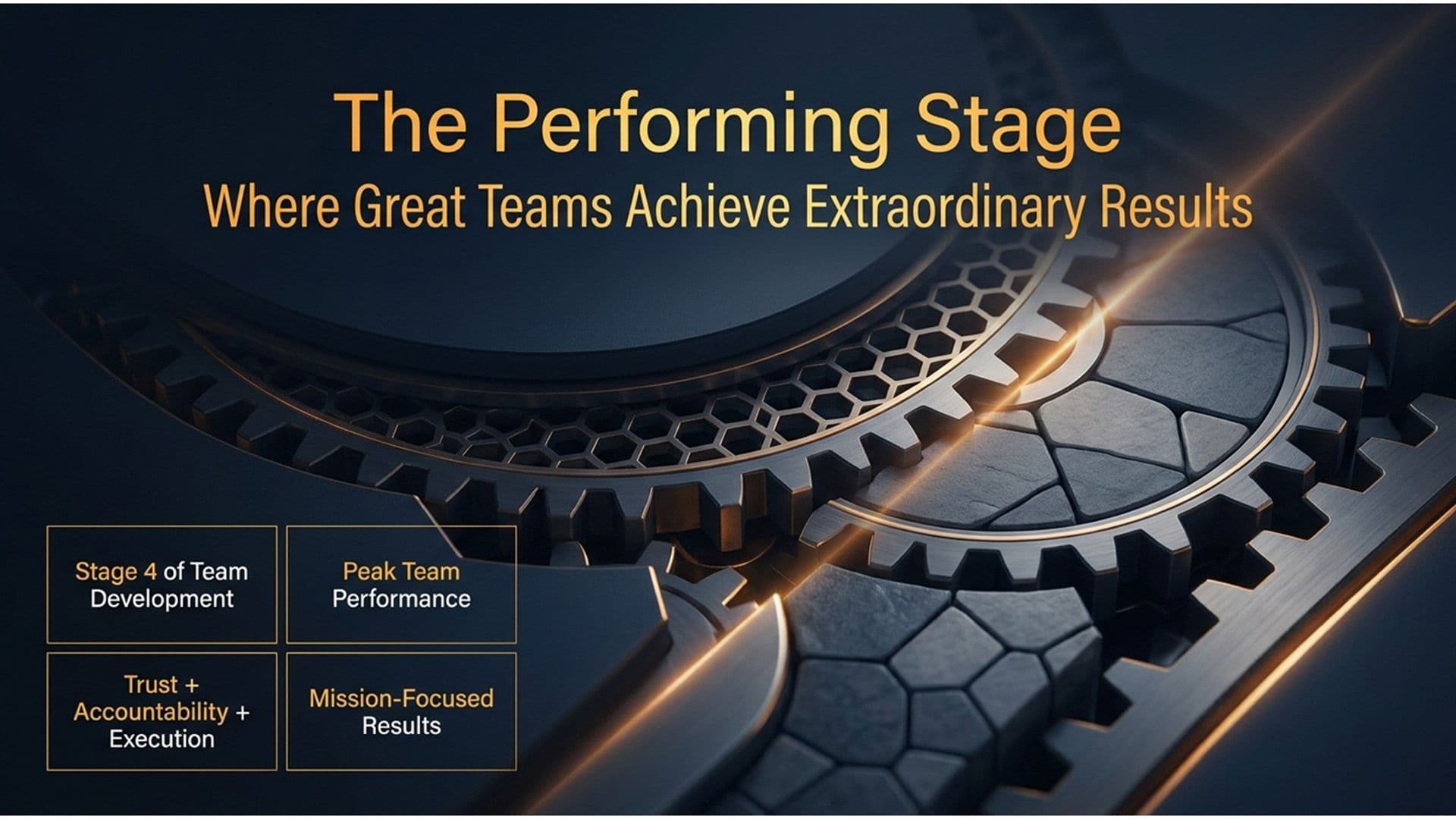
The Performing Stage
Where Great Teams Achieve Extraordinary Results
- Stage 4 of Team Development
- Peak Team Performance
- Trust + Accountability + Execution
- Mission-Focused Results
In Forming, we met each other. In Storming, we faced conflict. In Norming, we learned to work together.
In the fourth stage of team development: Performing, something remarkable happens.
This is where excellence begins to emerge.
What Is the Performing Stage?
- High trust environment
- Clear understanding of roles
- Strong communication
- Collaborative problem-solving
- Consistent achievement of goals
Performing is where the team functions almost like a well-oiled machine. People know their responsibilities, the mission, how to communicate, and how to solve problems.
The leader no longer spends most of their time managing conflict. Instead, the team becomes largely self-directed. The energy shifts from maintenance to achievement.
Characteristics of Performing Teams
- Trust is high
- Accountability is embraced
- Initiative is common
- Members support one another
- Focus remains on results
Performing teams have several unique characteristics. Trust is no longer fragile. People speak honestly, receive feedback, own mistakes, and help each other succeed.
There's very little drama because people are focused on solutions rather than problems.
What High Performance Looks Like
- Consistent results
- Efficient decision-making
- Innovation and creativity
- Adaptability
- Strong morale
High-performing teams don't just work harder — they work smarter. They adapt quickly, make better decisions, solve problems faster, and innovate continuously. The team develops momentum.
Nature Example: The Honeybee Colony
- Every bee knows its role
- Shared mission
- Constant communication
- Maximum productivity
One of nature's greatest examples of performing is a honeybee colony. Thousands of bees operate with remarkable coordination.
- Each bee understands its purpose.
- No bee tries to do every job.
- They trust the system and focus on their assignment.
- The result is extraordinary productivity.
Great teams operate the same way.
The Leader's Role in Performing
- Empower others
- Remove obstacles
- Develop future leaders
- Maintain vision
- Celebrate success
The leader's role changes dramatically in Performing. The leader becomes less of a supervisor and more of a coach. Instead of directing every action, the leader empowers, encourages, develops, and protects culture. The leader helps others succeed.
Biblical Example: Nehemiah Rebuilds the Wall
Nehemiah 4
- Clear mission
- Unified people
- Shared responsibility
- Effective execution
- Extraordinary results
Nehemiah provides one of Scripture's best examples of a performing team. Everyone understood the mission, their role, and the urgency.
Families worked together. Leaders delegated responsibilities. People solved problems quickly.
The wall was completed in just 52 days. That's what happens when teams move into Performing.
Biblical Example: The Early Church
Acts 2:42-47
- Unified purpose
- Shared commitment
- Mutual support
- Rapid growth
The early church became a high-performing spiritual team. They were unified, committed, generous, and mission-focused.
Because they functioned together effectively, God used them powerfully. Their influence multiplied.
The Dangers of Success
- Pride
- Complacency
- Overconfidence
- Burnout
- Mission drift
One of the greatest threats to Performing is success itself. Teams can begin believing they've arrived or that they no longer need improvement. But every successful team must remain humble and vigilant. Success is never an excuse to stop growing.
Keeping a Team in Performing
- Continuous improvement
- Open communication
- Celebrate wins
- Address issues quickly
- Maintain accountability
Performing isn't a destination — it's a discipline. High-performing teams stay healthy because they keep learning, keep communicating, and keep improving. They refuse to become stagnant.
What Performing Teams Say
- How can we improve?
- How can we help?
- What is best for the mission?
- What can we learn?
- How can we serve?
The language of a performing team is different. They don't ask, "Who's to blame?" — they ask, "What's the solution?" They don't ask, "What's in it for me?" — they ask, "What's best for the mission?"
The Five Foundations of High Performance
- Trust
- Communication
- Accountability
- Purpose
- Commitment
Every performing team stands on five foundations.
- Without trust, teams hesitate.
- Without communication, teams drift.
- Without accountability, teams decline.
- Without purpose, teams lose direction.
- Without commitment, teams lose momentum.
Performing Declarations
- We trust one another.
- We communicate clearly.
- We embrace accountability.
- We pursue excellence.
- We focus on the mission.
- We help each other succeed.
Let's read these declarations together. These are the attitudes that sustain high-performing teams.
Closing Challenge
- Great teams are built intentionally
- Excellence requires commitment
- Trust fuels performance
- The mission matters most
Great teams don't happen by accident — they are built intentionally. The journey from Forming to Performing takes patience, trust, communication, and perseverance.
But when a team reaches Performing, incredible things become possible.
- Organizations thrive.
- Ministries flourish.
- Businesses grow.
- Lives are changed.
And it all starts with people choosing to work together toward something greater than themselves.